
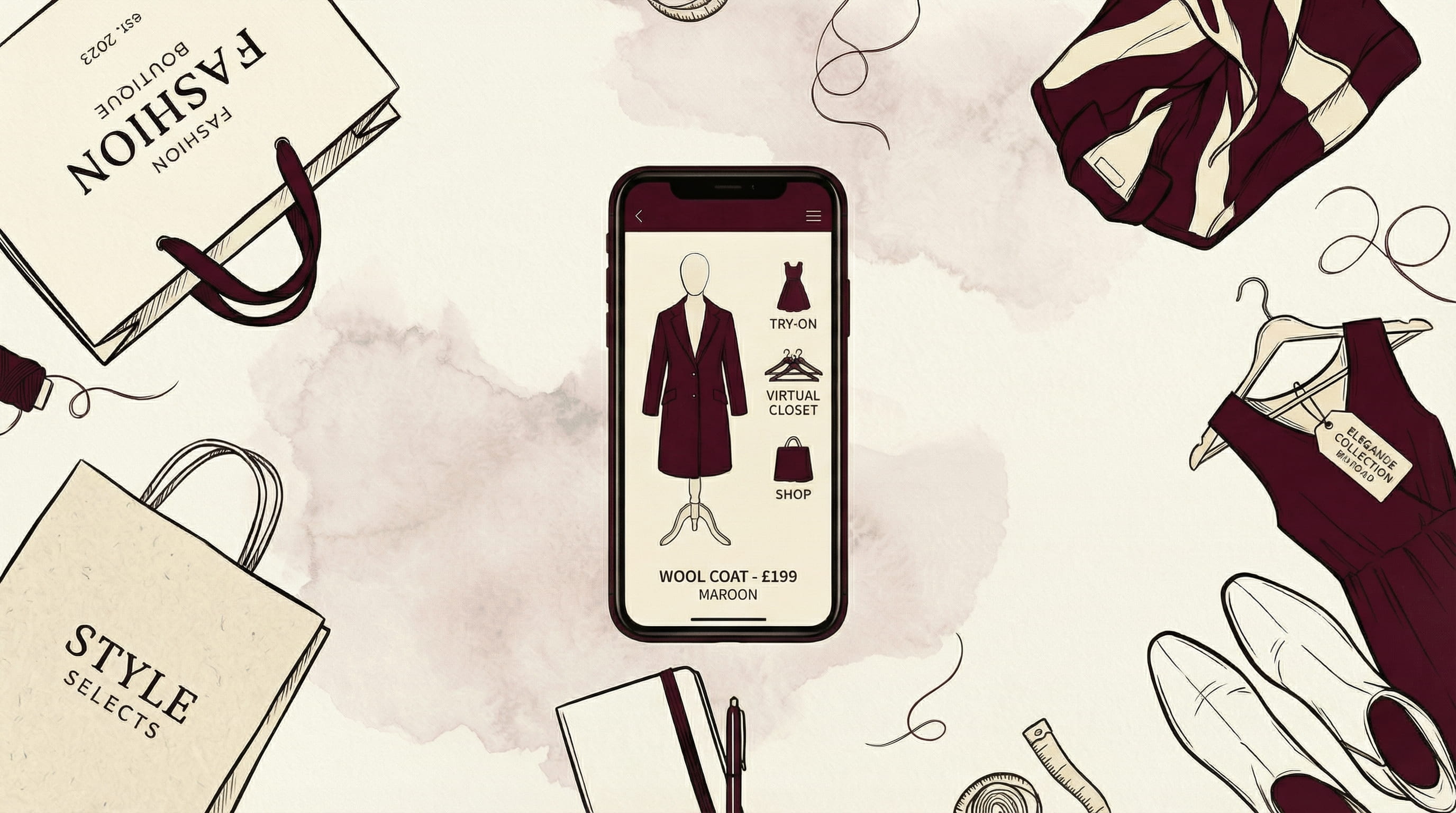
Imagine browsing an online clothing store and being able to see exactly how a jacket, dress, or pair of jeans would look — not on a generic mannequin, but on a model that matches your body type, or even on your own photo. That's the promise of AI virtual try on, and in 2026, it's no longer a futuristic concept. It's a practical tool that brands and shoppers are using every day.
This technology bridges the gap between online and in-store shopping by using generative AI and computer vision to simulate realistic product experiences. Whether it's trying on a jacket, visualizing a dress, or previewing how sneakers pair with an outfit, AI virtual try on tools give consumers the confidence to buy online without the usual guesswork.
Modern AI virtual try on platforms — like Fit It On — let both shoppers and fashion brands create stunning on-model imagery in seconds, turning flat product photos into interactive, conversion-driving visual content.
How AI Virtual Try On Works
To understand why AI fashion shopping is becoming the new norm, let's look at the technology behind it. Modern virtual try on systems use generative AI — specifically diffusion models and transformer-based architectures — combined with computer vision to produce photorealistic results.
The process typically works like this: a user uploads a photo of a person (or selects an AI-generated model), then uploads or selects a garment image. The AI analyzes the garment's shape, color, texture, and drape characteristics, then generates a new composite image showing the garment realistically fitted on the person — adjusting for pose, body proportion, and lighting conditions.
Unlike older approaches that relied on simple 2D overlays or basic image warping, current-generation tools use deep learning models trained on millions of fashion images to understand how different fabrics drape, fold, and interact with the human body. The results are images that look like they came from a professional photoshoot.
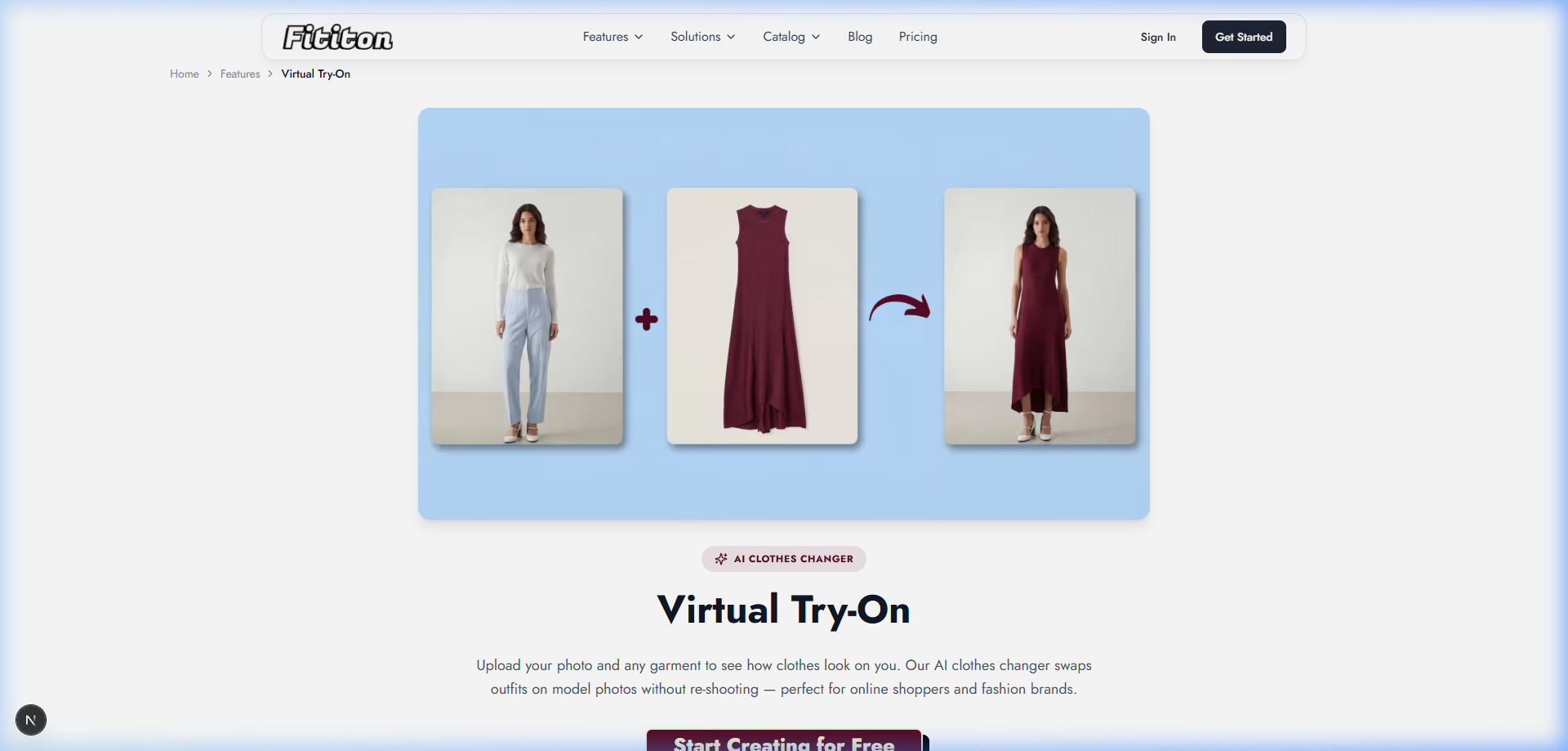
Platforms like Fit It On take this further by offering a full suite of AI fashion photography tools — not just try-on, but product-to-model conversion, AI model creation from text prompts, pose control, consistent model identity, and even AI fashion video generation.
The Benefits for Shoppers
The shift toward virtual try on isn't just a trend — it's solving real, painful problems in e-commerce. Here are the biggest benefits for consumers:
1. Confidence Before Purchase
One of the biggest frustrations in online shopping has always been the uncertainty of fit and appearance. With AI-driven virtual fitting technology, shoppers can see exactly how an outfit would look on a model with their body type before clicking "buy." This reduces hesitation and builds trust.
For example, Fit It On's virtual try-on uses AI garment mapping that gives users a visual preview of the fit, silhouette, and styling. The result? More confident purchases and fewer post-buy regrets.
2. Reducing Returns
Clothing returns remain one of the biggest challenges in e-commerce, with 25-40% of fashion items being sent back — compared to just 8-10% for non-fashion categories. By showing shoppers how products actually look on a body, AI virtual try on significantly lowers return rates. Industry data suggests brands implementing virtual try-on imagery see 15-25% return rate reductions.
3. Inclusive Shopping Experiences
Traditional fashion photography typically shows garments on just one or two body types. AI try-on tools can generate imagery across multiple body types, skin tones, and demographics — letting each customer see products on someone who actually looks like them. This inclusivity isn't just the right thing to do; it measurably improves conversion rates across all customer segments.
How It Helps Fashion Brands and Sellers
The benefits of AI fashion photography extend far beyond the consumer side. For brands and retailers, this technology solves some of the most expensive operational challenges in e-commerce:
1. Eliminating Photoshoot Costs
A traditional product photoshoot costs $2,000-5,000+ for a small collection — studio rental, photographer, models, styling, and post-production. With AI virtual try-on platforms like Fit It On, brands can produce equivalent on-model imagery for $0.07-0.12 per image, depending on the chosen quality level. That's a 90%+ cost reduction.
2. Higher Engagement & Conversion Rates
Products displayed on models consistently generate 30-50% higher conversion rates than flat-lay or ghost mannequin photos. And when users can interact with visual try-on experiences, they spend more time on product pages and are far more likely to complete a purchase.
3. Speed to Market
Traditional photography takes 2-4 weeks from scheduling to final retouched images. AI virtual try-on compresses this to minutes. Receive a new product sample, photograph it as a flat-lay, upload it to Fit It On, and have professional on-model images ready to publish — all in the same hour.
4. Consistent Visual Identity
With consistent model identity, brands can use the same AI model face across their entire product catalog — creating the visual consistency that shoppers associate with premium brands, without the scheduling challenges of booking real models.
The Complete AI Fashion Toolkit
Modern AI fashion platforms like Fit It On go well beyond basic virtual try-on. Here's the full toolkit available to brands in 2026:
- Virtual Try-On: Upload a person photo + a garment image → AI generates a realistic try-on composite
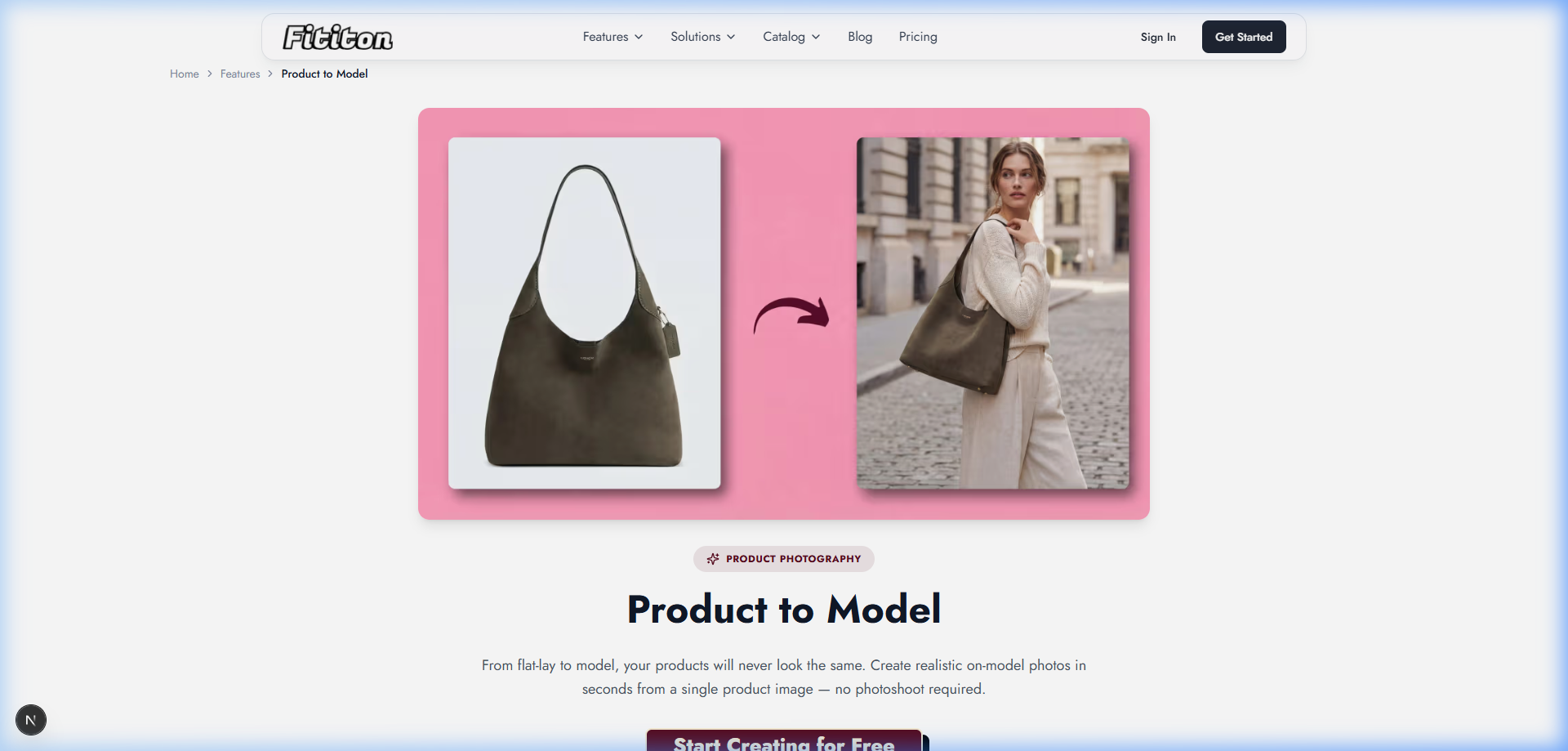
- Product-to-Model: Transform flat-lay or ghost mannequin photos into on-model imagery automatically
- AI Model Creation: Generate photorealistic model images from text descriptions — specify age, ethnicity, body type, and style
- Pose Control: Control exact model poses using reference images for consistent catalog styling
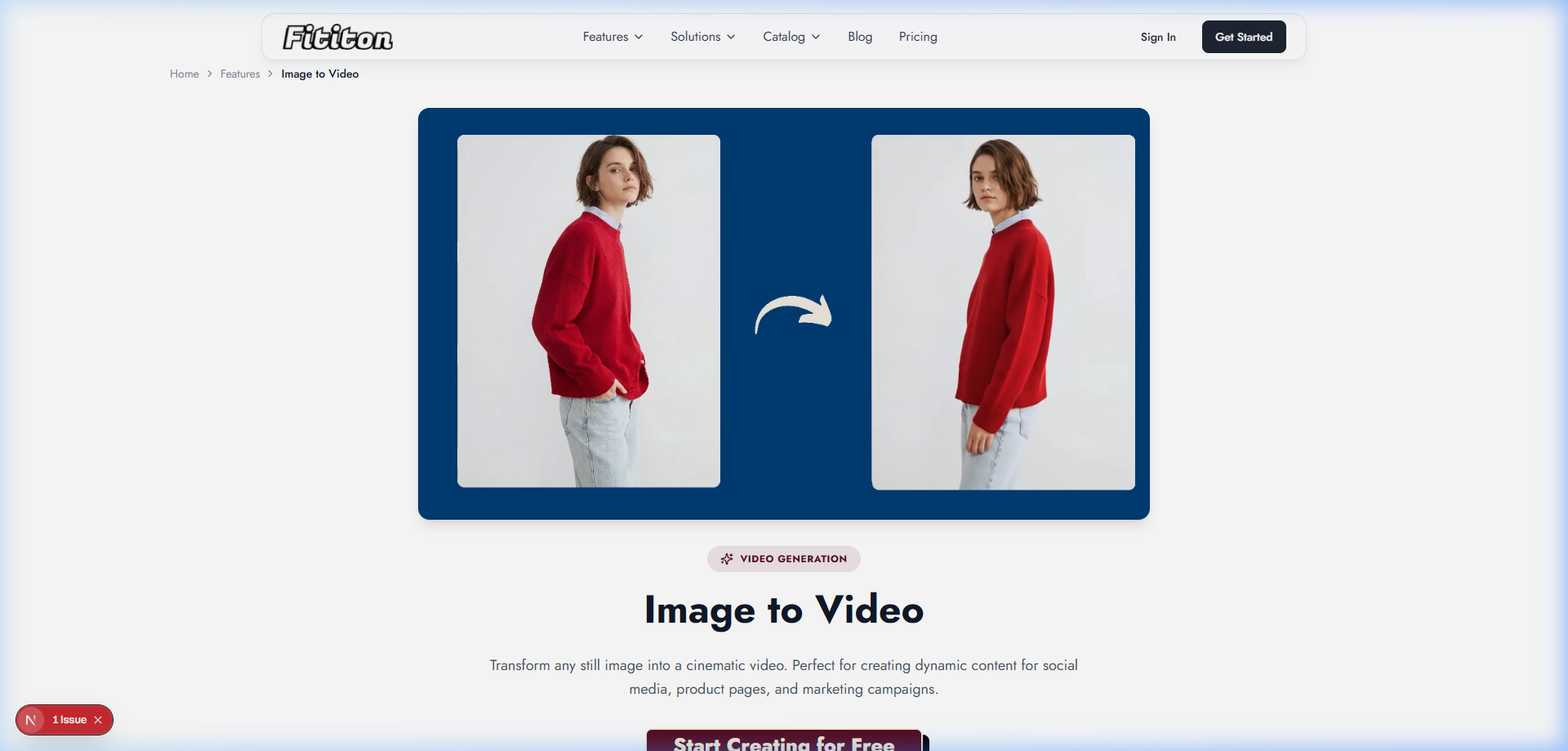
- Image-to-Video: Convert static product photos into short fashion video clips for social media and product pages
- Background Removal: Built-in free tool for instant background removal and replacement
- Social Studio: Generate content optimized for specific social media formats and dimensions
Current Challenges & Limitations
Despite remarkable progress, AI virtual try on technology continues to evolve. Some honest limitations to be aware of:
- Complex fabrics: Very detailed patterns, small text on garments, and heavily structured items (like tailored blazers) can occasionally produce artifacts.
- Input quality matters: The quality of AI output depends heavily on the quality of input images — well-lit, wrinkle-free garment photos produce dramatically better results.
- Accessories and shoes: Most current tools work best with upper body and full-body clothing. Accessories, jewelry, and footwear are improving but remain less consistent.
- Privacy: When users upload personal photos, strong data security practices are essential. Reputable platforms process images without storing personal data long-term.
Who's Using AI Try On in 2026?
Virtual try-on technology has moved from experimental to essential across the fashion industry:
- Independent e-commerce brands use platforms like Fit It On to produce their entire catalog of on-model imagery at a fraction of traditional photoshoot costs.
- Amazon has integrated AR-based try-on features for shoes, eyewear, and accessories, letting shoppers preview products using their phone camera before purchasing.
- Nike has integrated AR sizing tools into its app, using computer vision to help shoppers find accurate shoe sizes and reduce mis-matched orders.
- Shopify merchants are increasingly adding AI-generated on-model photos to their product listings to boost conversion rates.
- Dropshipping and print-on-demand sellers use AI try-on to create professional product imagery without ever touching the physical product.
The technology isn't limited to large corporations anymore. A one-person brand selling on Etsy or Shopify can now produce the same quality of visual content that major retailers invest millions in.
What Does AI Virtual Try-On Cost?
One of the most common questions about AI fashion tools is cost. Here's a transparent look at Fit It On's current pricing:
| Plan | Monthly Price | Credits | Best For |
|---|---|---|---|
| Free | $0 | 3 credits | Testing the platform |
| Personal | $4.99 | 40 credits | Individual use and exploration |
| Starter | $15 | 150 credits | Solo creators and boutiques |
| Pro ⭐ | $29 | 300 credits | Growing fashion brands |
| Agency | $69 | 1,000 credits | Agencies and high-volume studios |
Each virtual try-on costs just 1 credit. That means on the Pro plan, you can generate 300 on-model images per month for $29 — roughly $0.10 per image. Compare that to $50-200+ per image with traditional photography.
The Future of Online Shopping with AI
We're still in the early stages of what AI can do for fashion e-commerce. The next wave of innovation will likely include:
- Real-time video try-on — moving from static images to live video feeds where garments are rendered on the user in real time
- AR integration — combining AI try-on with augmented reality in mobile apps for in-store and at-home experiences
- Personalized fit recommendations — AI systems that learn your body measurements over time and proactively suggest sizes and styles
- Multi-garment styling — trying on complete outfits with coordinated accessories, not just individual garments
These advancements will continue to blur the line between online and in-store shopping, making the visual shopping experience richer, more personal, and more accessible than ever.
Getting Started
AI virtual try on technology is transforming online fashion by merging convenience, personalization, and confidence into a single experience. Whether you're a shopper who wants to see how clothes look before buying, or a brand looking to produce professional product imagery at a fraction of traditional costs — the technology is here, it works, and it's accessible.
Ready to see it in action? Try Fit It On for free — upload your first garment image and see the results in seconds. No credit card required.
Explore More AI Tools
Fit It On offers a full suite of AI-powered tools beyond what we covered above. Here are a few more worth exploring:
- Model Swap — Replace the model in any existing on-model photo while keeping the garment, lighting, and composition intact.
- Prompt Try-On — Generate on-model images from a text description alone, no garment photo needed. Great for pre-production visualization.
- Generate Angles — Create front, back, and side views from a single product image. No reshooting required.
- Ghost Mannequin Removal — AI-powered invisible mannequin effect without manual Photoshop editing.
Frequently Asked Questions
How accurate are AI virtual try-on results?
Current-generation tools like Fit It On produce results that are difficult to distinguish from traditional photography at standard web and social media viewing sizes. Garment details like prints, logos, and fabric textures are well-preserved. Results are best with high-quality input images.
What types of clothing work best with virtual try-on?
Upper body garments (shirts, blouses, jackets, sweaters) produce the most consistent results. Full-body outfits and dresses also work well. Accessories, shoes, and heavily structured items are improving but may vary.
Can I use AI-generated photos commercially?
Yes. Fit It On grants full commercial usage rights on all paid plans (Personal and above). You own the images you generate and can use them on your website, marketplaces, social media, and advertising.
Is my data safe when I upload photos?
Fit It On is privacy-first. Uploaded images are processed securely and are not used for AI training. User data is handled in compliance with GDPR and standard data protection practices.


