Fashion product photography is undergoing its biggest transformation since the switch from film to digital. AI-generated models are now capable of producing imagery that's virtually indistinguishable from traditional on-model photography, and the economic argument is turning the industry on its head.
But this isn't a simple "AI replaces everything" story. There are scenarios where real models remain the better choice, and understanding when to use each approach — or a hybrid of both — is the key to optimizing your product photography budget in 2026.
Cost Comparison
Real Model Photography Costs
| Cost Item | Range |
|---|---|
| Model day rate | $150 - $2,500+ |
| Photographer day rate | $300 - $1,500 |
| Studio rental (day) | $200 - $800 |
| Styling & makeup | $200 - $600 |
| Post-production (per image) | $5 - $25 |
| Total per look (estimated) | $50 - $200+ |
For a seasonal collection of 100 products with 3 angles each, you're looking at $15,000-60,000+ per shoot.
AI Model Photography Costs
| Cost Item | Range |
|---|---|
| Platform subscription | $4.99 - $69/month |
| Cost per generation (1K quality) | ~$0.05 - $0.12 per credit |
| Input image preparation | $0 (DIY) to $5 (outsourced) |
| Total per look (estimated) | $0.05 - $5 |
The same 100-product, 3-angle catalog would cost roughly $29-200 with AI (a single month on the Pro or Agency plan covers it) — a 90-99% cost reduction.
💡 Real math: On Fit It On's Pro plan ($29/month for 300 credits), 100 products × 3 angles = 300 images = exactly 300 credits at 1K quality. That's the entire catalog for $29. Want 4K quality? That's 5 credits per image — you'd need the Agency plan ($69/month for 1,000 credits), which covers 200 images at 4K.
Speed Comparison
- Traditional shoot: 2-4 weeks from planning to final retouched images (scheduling, shoot day, retouching, delivery)
- AI generation: Minutes to hours for an entire catalog
With tools like Fit It On, each on-model image generates in under 30 seconds. A 100-SKU catalog with 3 angles each could be completed in under 2 hours — work that would take a full production team 3-5 days.
This speed advantage isn't just about convenience. It fundamentally changes how brands can operate:
- New product launches: List products the same day you receive samples
- Trend responsiveness: Spot a trend and have products with professional imagery live before competitors finish booking their studio
- Seasonal refreshes: Reshoot your entire catalog with new backgrounds, models, or poses for seasonal campaigns — in hours, not weeks
- A/B testing: Generate multiple image versions to test which performs better, without any additional photography cost
Quality Comparison
This is where the nuance matters. AI-generated imagery has reached impressive quality levels, but there are real trade-offs to understand:
Where AI Excels
- Consistency: Every image has identical lighting, background, and color calibration — no variation between shoot days
- Diversity: Instantly generate the same product on models of different ethnicities, body types, and ages without booking multiple models
- Scale: Process hundreds of SKUs without quality degradation from a tired photographer or model at the end of a long shoot day
- Iteration: Don't like the pose? Regenerate in 30 seconds. Try a different background in the same session.
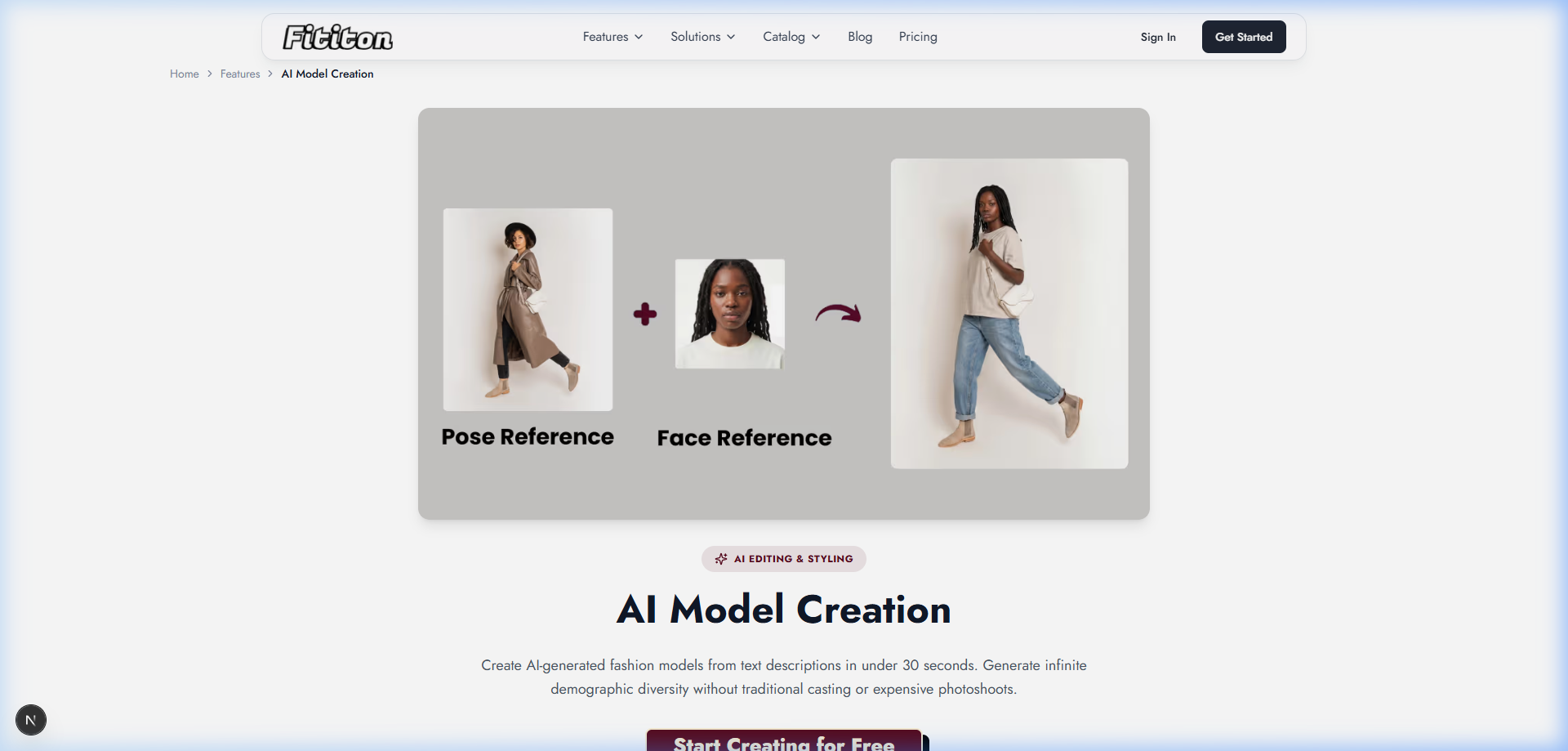
- Model consistency: With consistent model identity, the same AI model appears identical across your entire catalog — something that's impossible even with real models over multiple shoot days
Where Real Models Still Win
- Complex fabric drape: Very delicate fabrics like silk, organza, and heavy structured items can be more accurately captured on a real body in motion
- Brand storytelling: For hero campaign imagery, lookbooks, and emotional brand content, real models bring personality, movement, and narrative that AI is still developing
- Customer trust at the luxury tier: Some ultra-high-end brands find that "real photography" contributes to the perception of quality and authenticity
- Dynamic movement: While AI video is improving, complex runway-style movement and action shots still favor real video production
The Hybrid Approach: Best of Both Worlds
The smartest brands in 2026 aren't choosing one or the other — they're combining both strategically:
- AI for PDP (Product Detail Pages): Use AI-generated on-model photos for your standard product listings. This gets every SKU onto models quickly and affordably.
- Real models for campaign content: Reserve traditional photoshoots for hero imagery, lookbooks, and brand campaigns where storytelling and emotion matter most.
- AI for demand testing: Use AI-generated images to test which products or styling approaches perform best before investing in a full shoot.
- AI for diversity: Supplement real model shoots with AI-generated imagery showing the same products on additional body types and demographics.
- AI for speed: Use AI for new arrivals and restock items that need to go live immediately, then schedule real photoshoots for your top performers.
💡 Budget allocation tip: A practical split for a growing fashion brand: 80% of products use AI photography (entire catalog coverage at low cost), 20% of flagship/hero products get traditional photoshoots (brand campaigns, social media heroes, lookbooks). This gives you comprehensive catalog coverage and premium brand content.
FAQ
Are AI-generated fashion images legal to use commercially?
Yes. Platforms like Fit It On grant full commercial usage rights on all paid plans (Personal and above). The AI models are generated by the system, so there are no model release forms or usage restriction issues — something that actually simplifies the legal side compared to real model photography.
Can AI models show realistic fabric texture?
Yes, current-generation AI tools preserve fabric textures, prints, and logos with high accuracy. Results are best with clear, well-lit input images. Highly detailed embroidery, very small text, or extremely complex patterns may occasionally need regeneration to get optimal results.
Will using AI models hurt my brand perception?
For product listings and e-commerce catalog imagery, customer research shows no negative impact on purchase intent when AI-generated images match the quality of traditional photography. Brand perception concerns are primarily relevant for luxury and ultra-premium segments where the production values of traditional photography are part of the brand story itself.
How do I get started with AI fashion photography?
Start with a free trial on Fit It On — you get 3 credits to test the platform with your own product images. Upload a flat-lay or ghost mannequin photo, select an AI model, and see the results in 30 seconds. No credit card required.