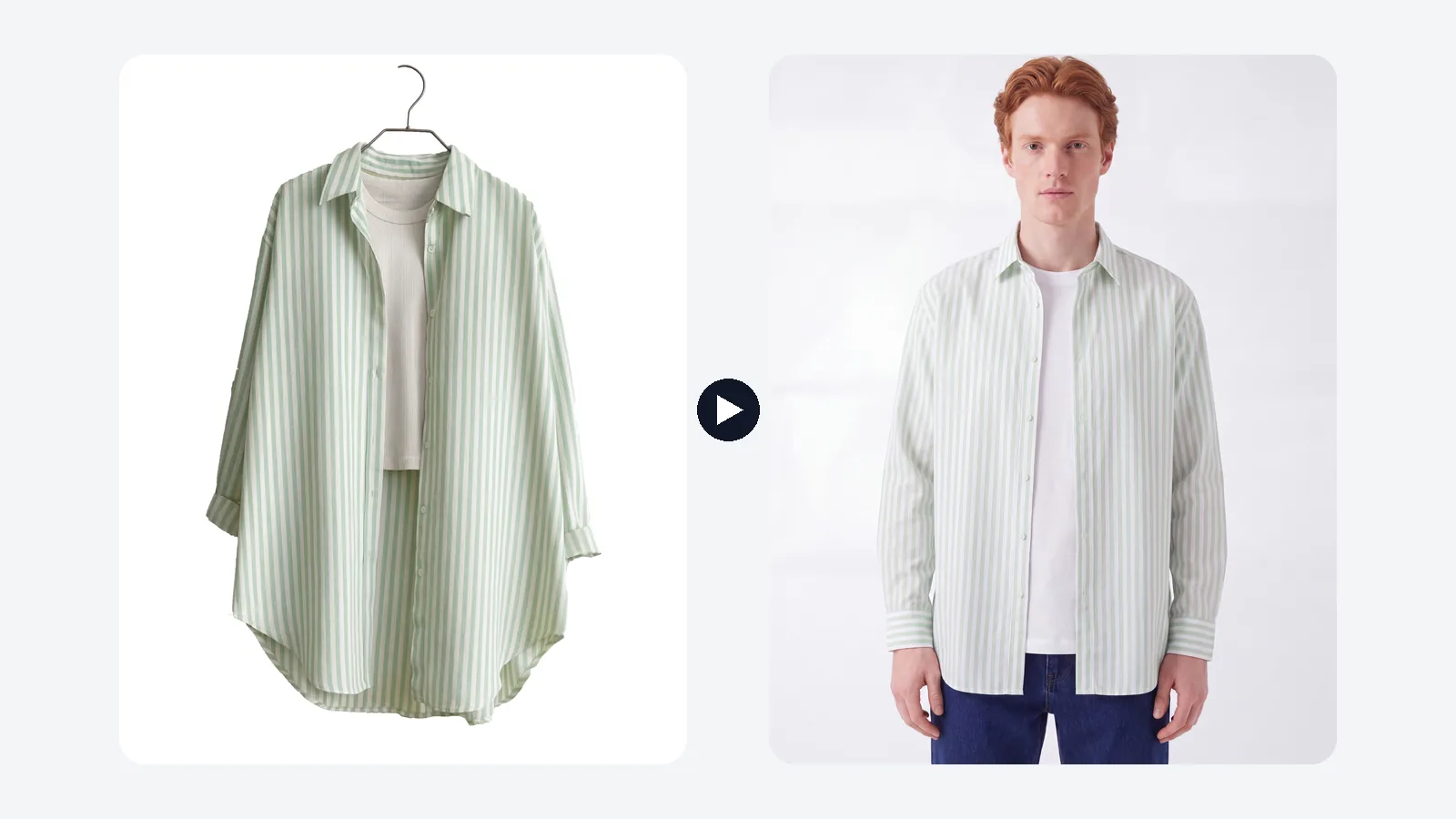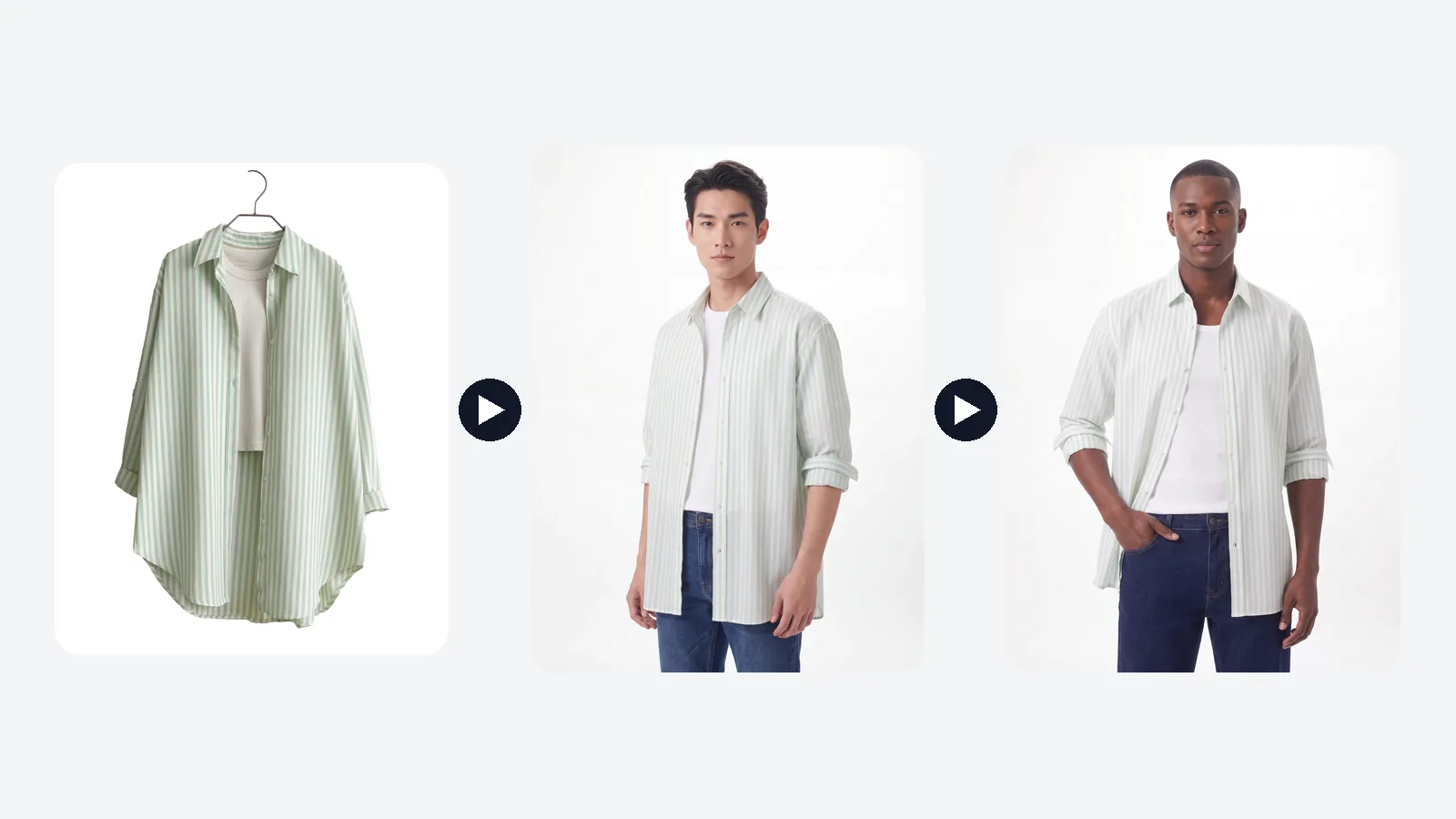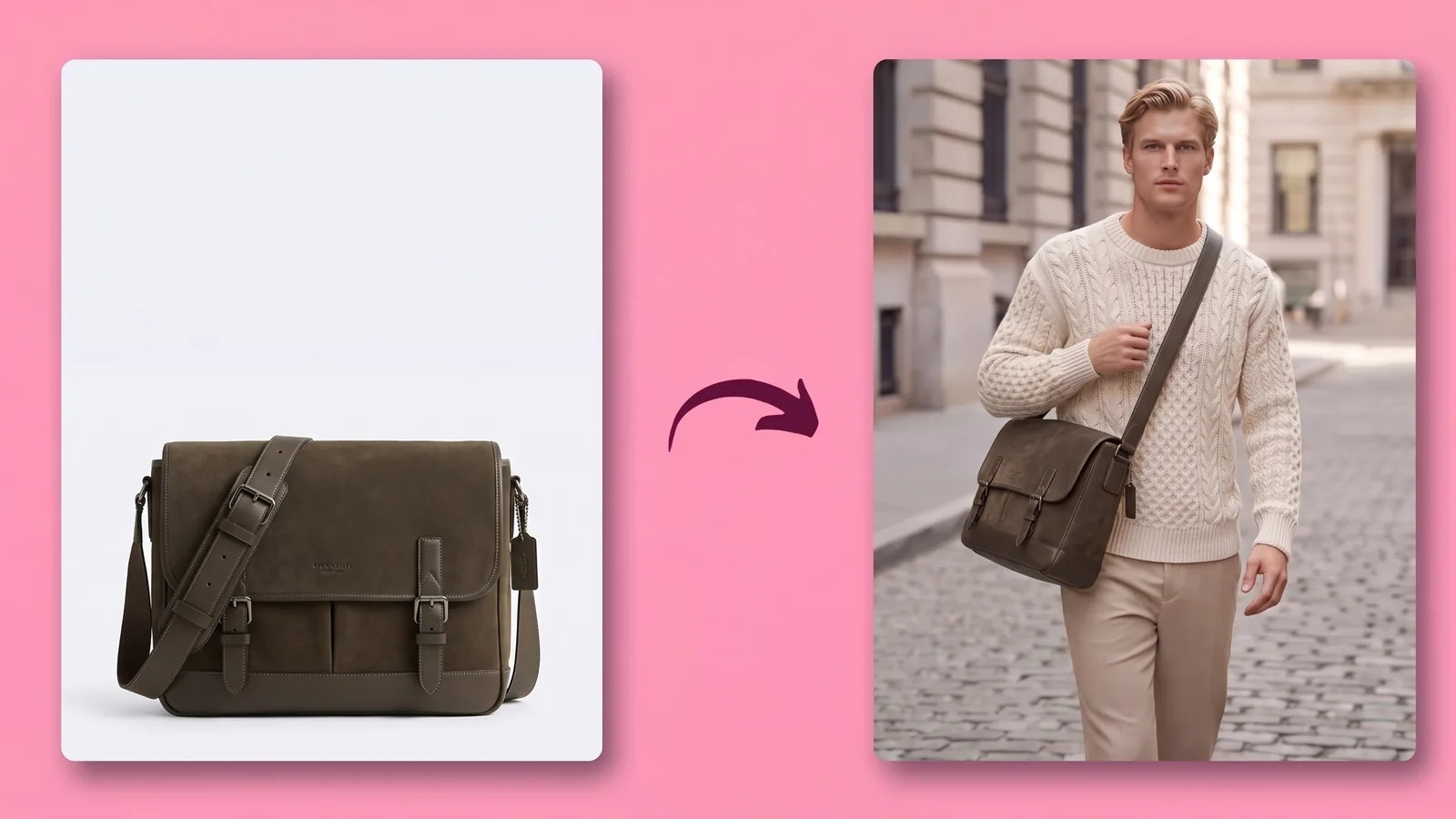
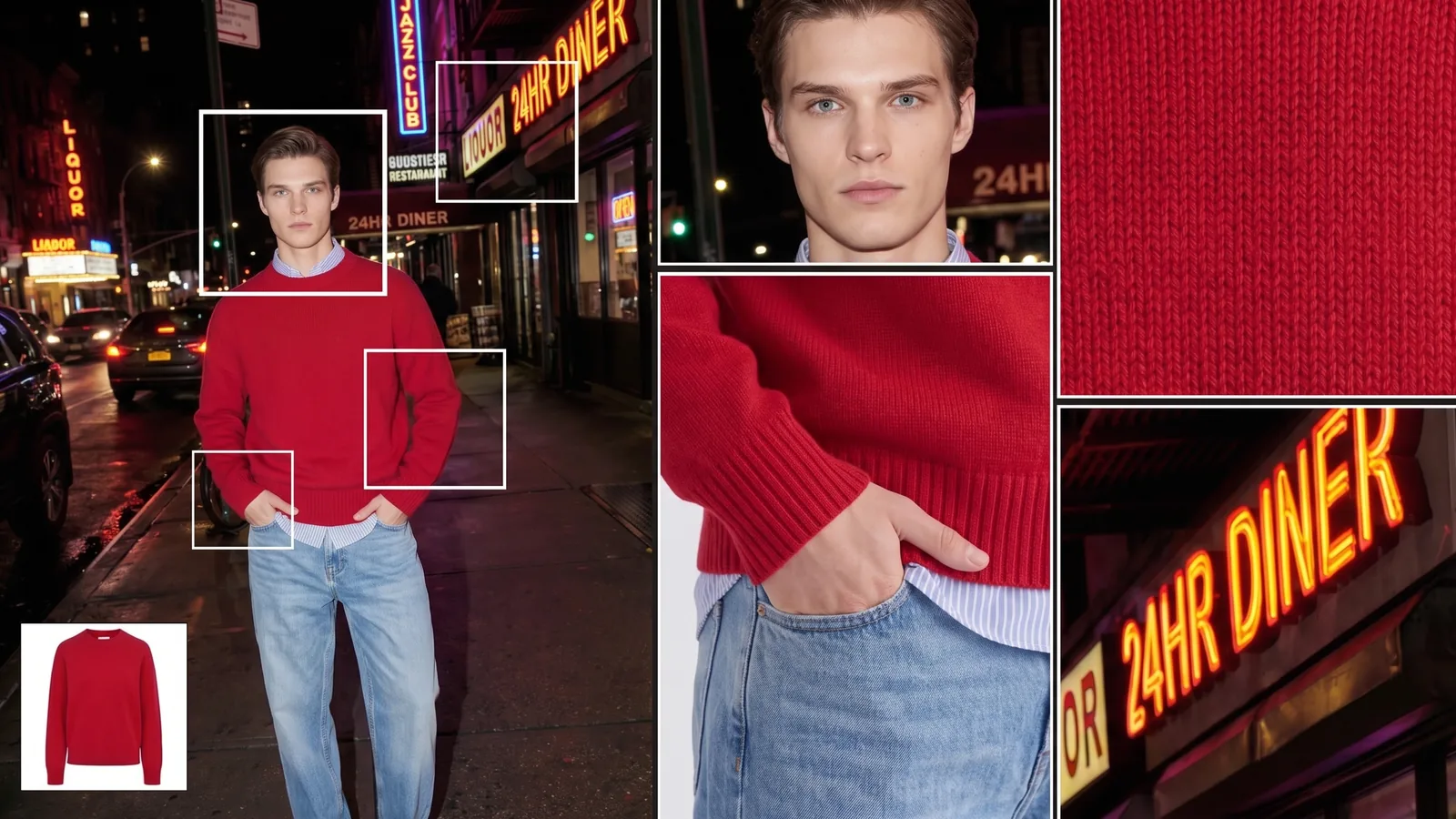
AI-generated fashion models cost roughly $0.07 to $1 per finished image and take under a minute each. A real model shoot works out to about $30 to $350 per image once the model, photographer, studio, styling and retouching are counted. AI wins on catalog volume and speed. Real models still win for true fit, hero campaigns and luxury branding.
Last updated: November 2026 · Prices checked November 2026
| Approach | Cost per image | Turnaround | Best for | Weak at |
|---|---|---|---|---|
| Studio shoot with agency model | About $75–$350 | Booking, then 1 shoot day per 8–15 products, then retouching | Hero campaigns, true fit, brand faces | Cost, scheduling, reshoots |
| Freelance shoot | About $30–$165 | Same as above, usually easier to book | Small brands, lifestyle and social content | Uneven quality, no-shows, less polish |
| Stock photos | About $3–$12 (iStock) | Minutes | Blog headers, banners, mood images | They never show your product; others can license the same image |
| AI model generation | About $0.07–$1 | 13–41 seconds per image (median) | Full catalogs, new arrivals, model and pose variety | Exact fit, fine text and logos, sheer fabrics, complex motion |
Real-shoot ranges use the public day rates below and assume 3 finished images per product (front, back, detail) and 8–15 products per shoot day. AI timings are medians from our own production data on the benchmarks page.
How much does an AI fashion model cost vs a real model?
An AI model image costs cents to under a dollar, while a real model image costs tens to hundreds of dollars. The gap comes from fixed day costs: a real shoot pays for people and space by the day, so the price per image depends on how many looks you finish.
What goes into a real shoot
- Agency model: $800–$1,500 a day for an ecommerce shoot, plus an agency fee of about 20% (Photta, 2026, an AI photo vendor). Experienced agency models run $1,500–$2,500 (Dojo Business, 2025 rates).
- Freelance model: $400–$800 a day in the US (Dojo Business) or $400–$1,200 (Photta).
- Photographer: $500–$3,000 a day (Shopify, 2026); $1,000–$2,000 for experienced fashion photographers (Dojo Business).
- Studio: $400–$1,000 a day, more in major cities (Dojo Business).
- Hair and makeup: $250–$800 a day each (Dojo Business).
- Retouching: $10–$35 per ecommerce image (Dojo Business).
Shopify's guide puts per-image product photography at $50–$350, which matches the range above.
How the per-image ranges were worked out
- Agency, low: model $960 (with fee) + photographer $1,000 + studio $400 + hair and makeup $500 = $2,860 a day. 15 products × 3 images = 45 images. $2,860 ÷ 45 = $64, plus $10 retouching = about $75.
- Agency, high: model $3,000 (with fee) + photographer $2,000 + studio $1,000 + hair and makeup $1,600 = $7,600 a day. 8 products × 3 = 24 images. $7,600 ÷ 24 = $317, plus $35 = about $350.
- Freelance, low: model $400 + photographer $500, no studio = $900 ÷ 45 = $20, plus $10 = about $30.
- Freelance, high: model $1,200 + photographer $1,500 + studio $400 = $3,100 ÷ 24 = $129, plus $35 = about $165.
Usage rights can add more. Photta notes that paid social, ads and print usage are often charged on top of the day rate.
What AI costs
AI tools charge per image or per credit, so cost scales with output, not days. On Fit It On, a 1K on-model image uses 1 credit, 2K uses 3 and 4K uses 5. Picking a specific preset model adds 1 credit. Credits cost $0.069–$0.125 depending on plan, from $4.99/month for 40 credits to $69/month for 1,000 (see pricing). Other tools land in a similar cents-per-image range; our AI model generator comparison lists their prices.
Stock photos look cheap on paper: iStock's Basic plan is $29/month for 10 images, or $2.90 each (iStock, checked November 2026). But a stock photo shows someone else's clothes, so it can't replace product photos at any price.
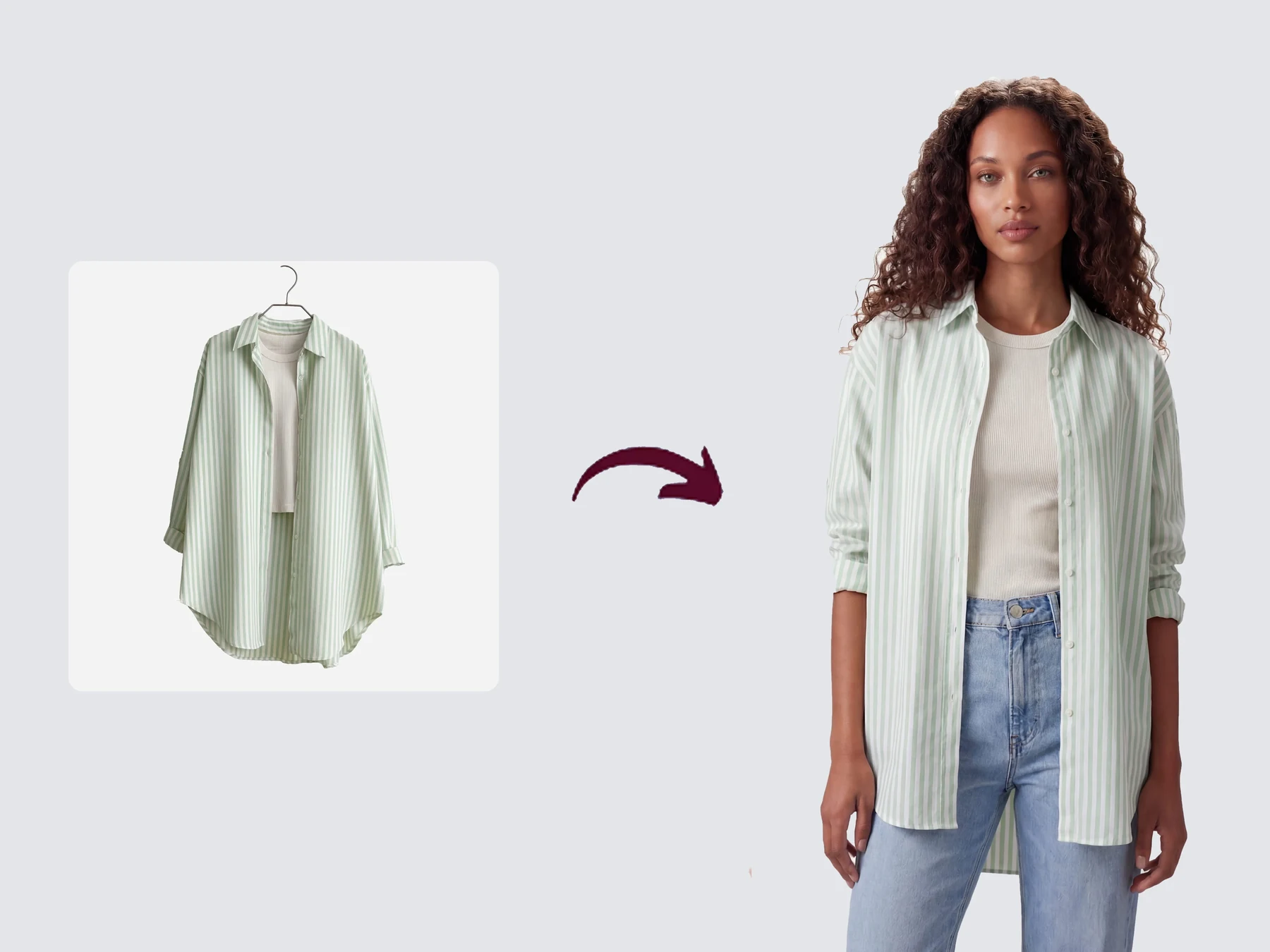
Worked example: a 100-SKU catalog
For 100 products with 3 images each, a mid-range agency shoot costs about $50,000, a freelance shoot about $22,500, and AI about $110–$200. Here is the arithmetic, using the mid points of the rates above.
Assumptions: 100 SKUs × 3 images = 300 finished images. Real shoots finish 10 products a day, so 10 shoot days. AI needs re-runs: we assume 30% of images are generated twice, so 390 generations.
| Approach | Arithmetic | Total | Per image |
|---|---|---|---|
| Agency studio shoot | Day: model $1,200 (incl. 20% fee) + photographer $1,500 + studio $700 + hair and makeup $1,000 = $4,400. × 10 days = $44,000. Retouching 300 × $20 = $6,000. | $50,000 | $167 |
| Freelance shoot | Day: model $600 + photographer $800 + studio $400 = $1,800. × 10 days = $18,000. Retouching 300 × $15 = $4,500. | $22,500 | $75 |
| AI (Fit It On, 2K, chosen model) | 390 generations × 4 credits = 1,560 credits. At $0.069 per credit (Agency) = $108. At $0.125 (Personal) = $195. | $108–$195 | $0.36–$0.65 |
Time is the other big gap. At the measured 2K median of 26 seconds per image, 390 generations take about 2.8 hours of generation time if you run them one after another, plus your time to review. The real shoot needs 10 shoot days, plus booking and retouching.
One cost the AI line leaves out: you still need a clean product photo of each item as input, such as a flat-lay, hanger or mannequin shot. If you don't have those yet, our guide to product photos without a photoshoot covers how to take them.
Can AI models be indistinguishable from real models?
At product-page size, a good AI image of a simple garment is often hard to tell from a photo. Up close, the weak spots are predictable, so check every image before it goes live.
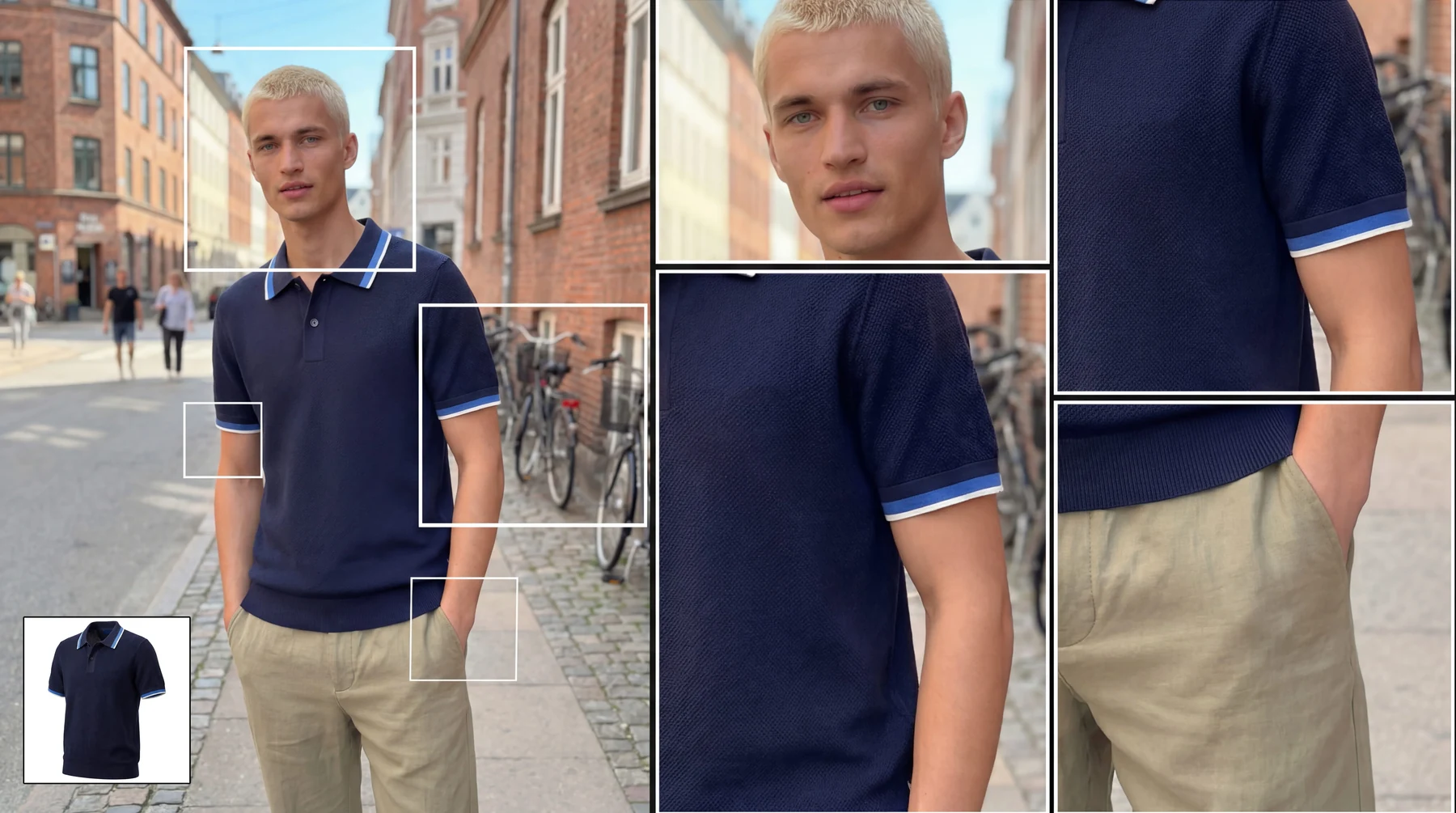
Where AI images usually hold up:
- Plain and simple garments: tees, knits, shirts, trousers.
- Studio lighting and plain backgrounds, which stay the same across a catalog.
- Faces and skin at normal viewing size.
Where they give themselves away:
- Text, logos and small prints: letters can warp and repeats can drift.
- Hands, jewelry and bag straps: extra fingers or merged details still happen.
- Sheer, sequined or very delicate fabrics: texture can be smoothed out.
- Fit: the model shows a plausible fit, not how your size M fits a real body.
A simple check: zoom to 100%, compare against the real garment (seams, buttons, print placement), and re-run any image that changed a detail. Higher resolution helps with zoomed views; 2K and 4K outputs keep more texture than 1K.
If you use AI models in ads, check disclosure rules. New York signed a law in December 2025 requiring ads to disclose AI-generated synthetic performers (New York Governor's office, 2025).
Are AI models good enough for lookbooks?
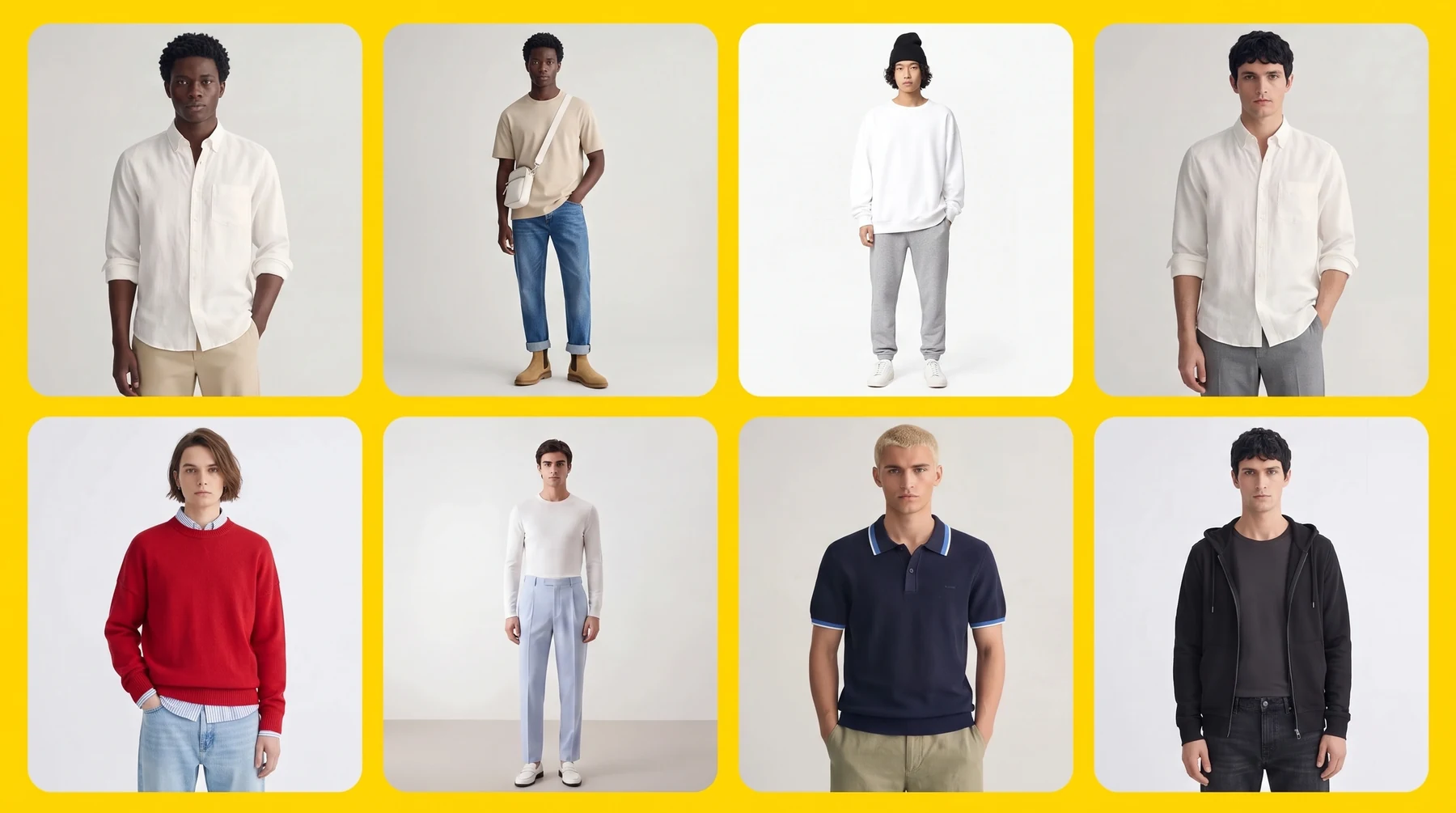
Yes for digital lookbooks and line sheets, where you need many looks on one consistent model. They are weaker for story-led seasonal lookbooks built on a location, movement and people interacting.
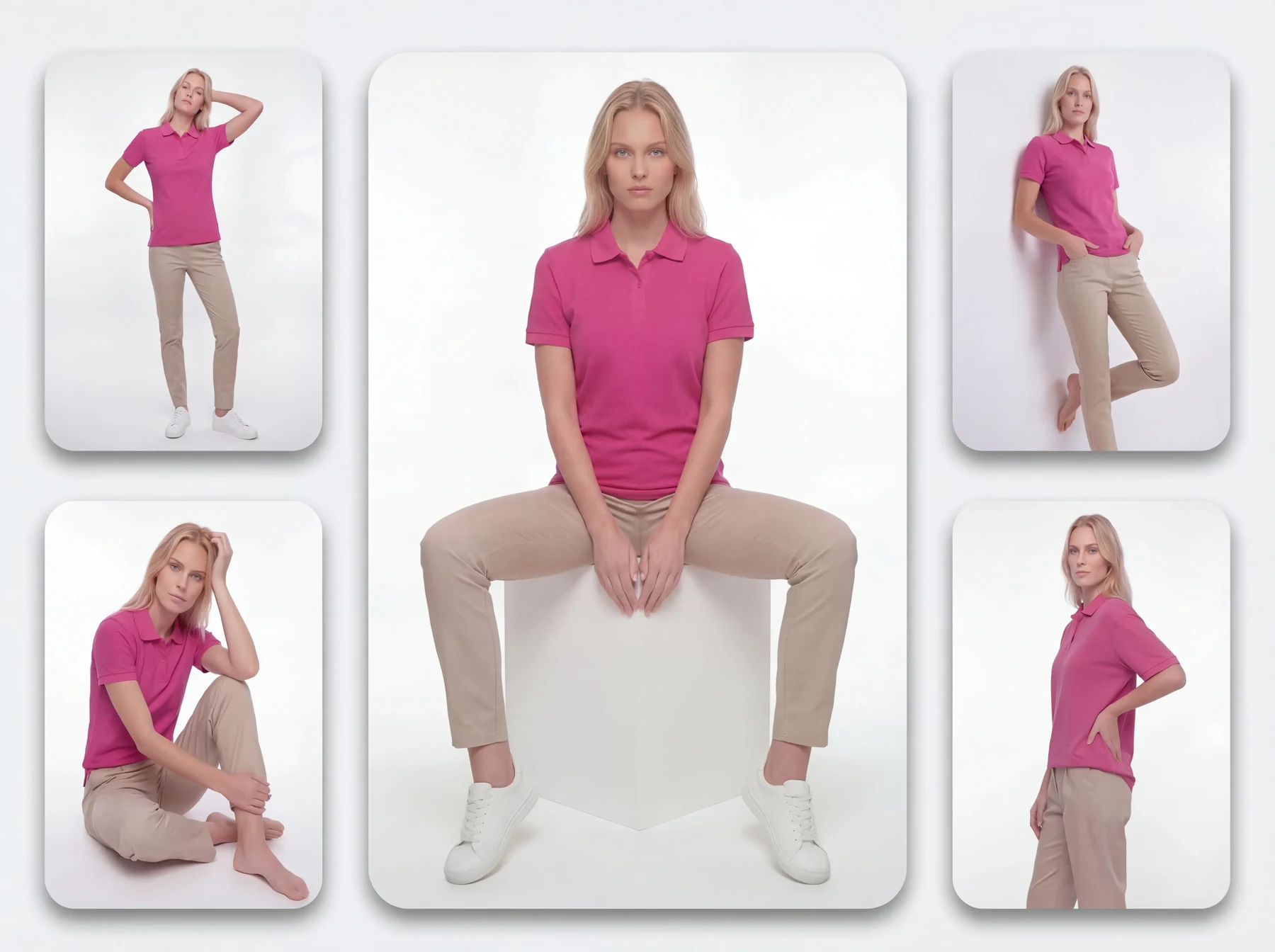
The key is keeping one face and one style across every page:
- Pick or create one model and reuse it with consistent models.
- Set poses on purpose with pose control instead of taking random ones.
- Keep one background and lighting style for the whole collection.
- Add back and side views where buyers need them.
When should you still hire a real model?
Hire a real model when the image has to prove how a garment fits or carry your brand story. AI is a catalog tool, not a full replacement.
- Fit and size photos: shoppers want to see a real body and the model's height and size. AI can't measure your garment.
- Hero campaigns and brand faces: a recognizable person, real places and real interaction still carry more weight.
- Delicate fabrics: silk, organza, lace and sequins in motion are safer on a real body.
- Complex movement: AI can turn a still into a short clip (see our image-to-video guide), but runway walks and action shots still favor a real video shoot.
- Luxury positioning: some brands treat real photography as part of the product.
Many brands mix both. Example split: AI for every product page and new arrival, real shoots for the few best sellers and the seasonal campaign. You can also use AI images to test which products sell before paying for a full shoot.
If you want an AI version of a real model, get consent in writing. New York's Fashion Workers Act, in force since June 19, 2025, requires separate written consent for digital replicas that states the scope, purpose, pay and duration (NY Department of Labor).
Related guides
Frequently asked questions
How much does AI fashion model generation cost?
Most AI model tools charge from a few cents to about $1 per image, depending on resolution and plan. On Fit It On, a 2K on-model image uses 3 credits, which is $0.21–$0.37 depending on the plan. A real shoot typically costs $30–$350 per image once all day rates are counted.
Are AI fashion models cheaper than stock photos?
Per image, they are in the same low range or cheaper: iStock's Basic plan works out to $2.90 per image. The real difference is that stock photos show someone else's clothes. AI model images show your actual product, so they can go on a product page.
Are AI fashion models realistic?
For simple garments in studio light, good AI images look realistic at product-page size. They still slip on text and logos, hands, sheer fabrics and exact fit. Check each image at 100% zoom against the real garment before publishing.
What is the quality difference between AI fashion models and traditional photos?
Traditional photos show the true fit and drape of a garment on a real body. AI images are more consistent across a catalog and far cheaper to redo, but they show a plausible fit rather than a measured one. Use AI for catalog volume and real shoots for fit and campaigns.
How long does it take to generate an AI model photo?
On Fit It On, median generation times run from about 13 seconds (1K angles) to about 41 seconds (4K), measured on production requests. A 100-product catalog with 3 images each takes a few hours of generation time. See the benchmarks page for every feature.